Tel:
0086-190-3126-6699
Email:
jessica@sanlongdrillbit.cn

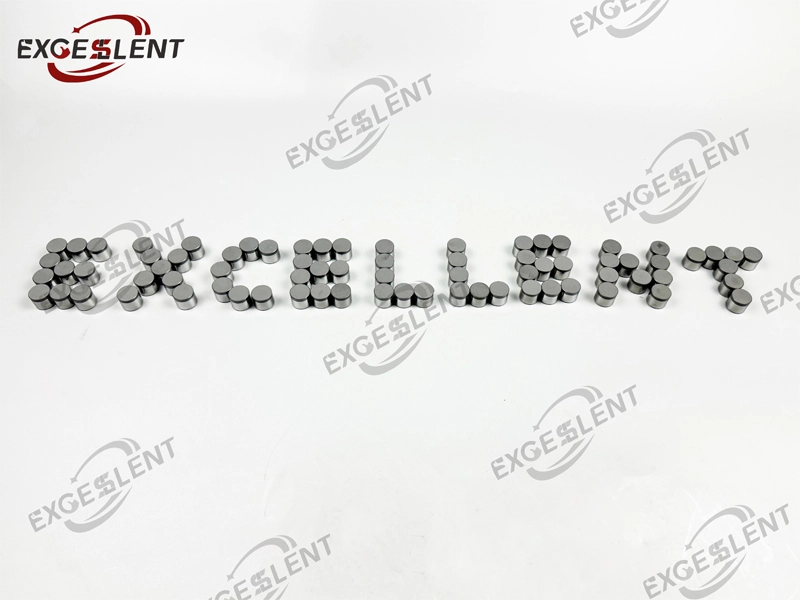
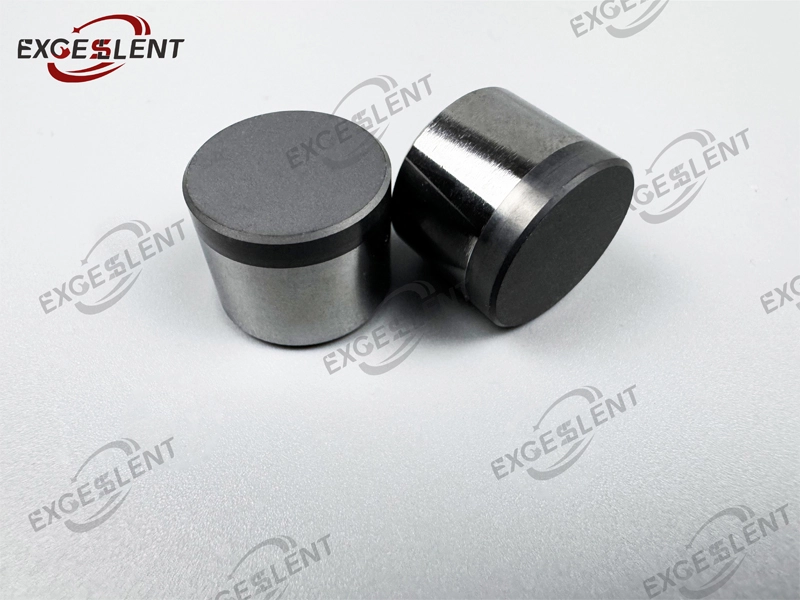
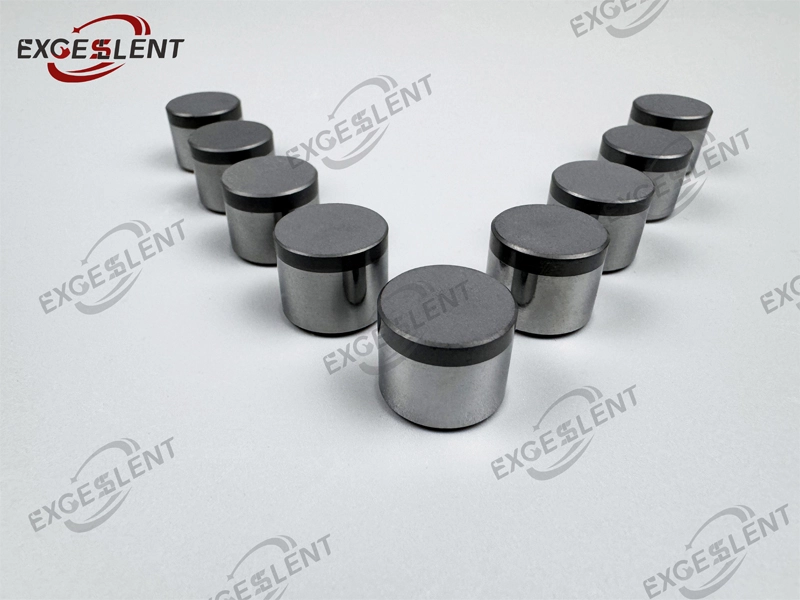
As a leading PDC cutter manufacturer, we specialize in high-performance Polycrystalline Diamond Compact (PDC) cutters, designed for superior durability, wear resistance, and efficiency in drilling applications.
Our PDC cutters for sale are manufactured through high-temperature, high-pressure sintering, bonding a polycrystalline diamond layer to a tungsten carbide substrate for exceptional hardness and impact strength.
Compliant with ISO 9001, API Spec 7-1, SY/T5164, and SY/T5-217 industry standards, each pdc cutter undergoes rigorous performance testing to ensure precision, reliability, and extended service life.
| Parameter | Description |
| Diameter | 8mm, 13mm, 16mm, 19mm, 25mm (varies by use case) |
| Thickness | Typically 3-5mm or more |
| Shape | Cylindrical, Round, Dome, or Beveled Edge |
| chamber Angle | 30° to 45° (improves impact resistance) |
| Thermal Stability | Up to 750-1,200°C (depends on material) |
| Impact Resistance | Designed to handle high impact loads |
| Abrasiveness | Optimized for both soft and hard formations |
| Bonding Layer | Tungsten carbide base for wear resistance |
| Edge Design | Sharp or chamfered for different drilling needs |
| Application | Oil and gas drilling, geothermal drilling, mining exploration |
PDC cutters are also commonly identified in the drilling industry by size designations based on cutter diameter and height. Examples may include 1308, 1313, 1613, 1616, 1913 and 1916. Exact dimensions and available configurations should be selected according to the drill bit design and intended application.
A conventional PDC cutter consists of a polycrystalline diamond table bonded to a tungsten carbide substrate under high-pressure and high-temperature manufacturing conditions.
The two main parts perform different functions:
Polycrystalline Diamond Layer: Forms the cutting surface and provides high hardness and abrasion resistance.
Tungsten Carbide Substrate: Supports the diamond layer and provides the mechanical strength needed to integrate the cutter into the drill bit.
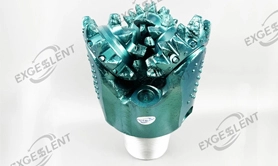
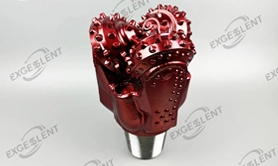
Unlike roller cone teeth, which mainly crush and fracture rock, PDC cutters remove formation material primarily through a shearing action. As the polycrystalline diamond compact bit rotates, the cutters engage the formation and continuously shear material from the bottom of the hole.
This cutting mechanism can provide efficient penetration when the PDC cutter design, bit structure and drilling parameters are properly matched to the formation.
Super pressure resistance
Super abrasiveness
Super thermal stability
Superior Hardness and Wear Resistance – The high-strength polycrystalline diamond layer offers remarkable hardness, wear resistance, and self-sharpening capabilities, assuring long-lasting endurance.
Outstanding Impact Resistance — Engineered with innovative bonding technology, the PDC cutter is engineered to handle high impact loads, retaining stability in severe drilling situations.
High Cutting Efficiency – Featuring sharp cutting edges and an optimized design, PDC cutters enable fast and efficient material penetration, improving drilling speed and reducing energy consumption.
The best PDC cutter depends on the complete drilling environment rather than one specification alone. Buyers and drilling engineers should consider the following factors.
Cutter diameter affects cutting engagement, cutter density and how cutters can be arranged on the bit face.
Larger cutters can provide greater cutting engagement, while smaller cutters can provide greater flexibility when designing cutter placement. The appropriate diameter depends on the bit size, cutter layout and formation being drilled.
Abrasive formations place greater demands on the diamond cutting layer. When abrasion is expected to be a major source of cutter wear, wear resistance becomes an important selection consideration.
Interbedded, fractured or irregular formations can expose cutters to repeated impact loading. Cutter toughness, edge design and chamfer configuration become increasingly important under these conditions.
Chamfering helps modify stress distribution around the cutter edge. The appropriate edge design depends on the required balance between cutting aggressiveness and resistance to edge damage.
Formation hardness alone should not determine PDC cutter selection. Rock strength, abrasiveness, homogeneity, interbedding and expected impact loads should be considered together.
Weight on bit, rotational speed, cooling, hydraulics and bit design also influence cutter performance. A PDC cutter that performs well in one drilling environment may behave differently under another combination of operating parameters.
Different formations create different wear and loading conditions at the cutting edge. The table below provides general considerations when selecting PDC cutters.
| Formation Condition | Main Cutter Requirement | Selection Consideration |
| Soft, homogeneous formations | Cutting efficiency | A more aggressive cutting structure may support efficient penetration |
| Medium formations | Balance of wear and toughness | Consider both abrasion resistance and impact performance |
| Abrasive formations | Wear resistance | Diamond-table durability becomes increasingly important |
| Interbedded formations | Impact resistance | Cutter toughness and edge protection should receive greater attention |
| Fractured or impact-prone formations | Edge durability | Chamfer and cutter geometry may help manage impact loading |
| High thermal-load conditions | Thermal performance | Cutter material, cooling and drilling parameters require careful consideration |
PDC cutters are used as cutting elements in a wide range of fixed-cutter drilling tools.
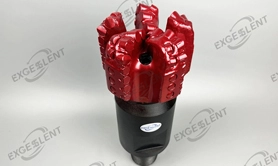
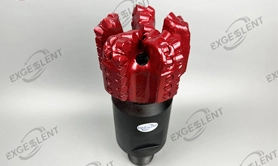
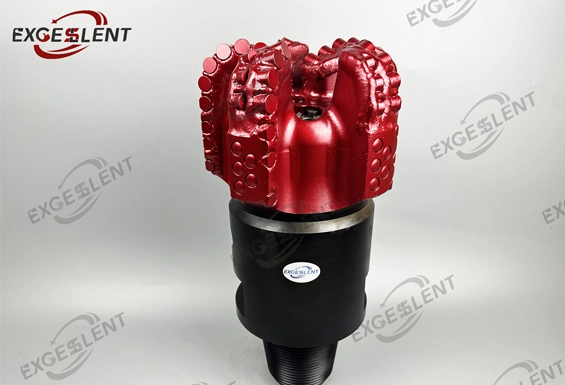
PDC cutters are widely used in oil and gas PDC drill bits, where their shearing action and wear resistance support efficient drilling in suitable formations.
PDC cutting elements are used in drilling tools for geological exploration, coalfield exploration and selected mining applications where wear resistance and continuous cutting performance are important.
PDC cutters can also be incorporated into PDC core drill bits used to obtain geological core samples.
Depending on the formation and bit design, PDC cutting structures can be used in geothermal and water well drilling, particularly where continuous rotary drilling and efficient formation removal are required.
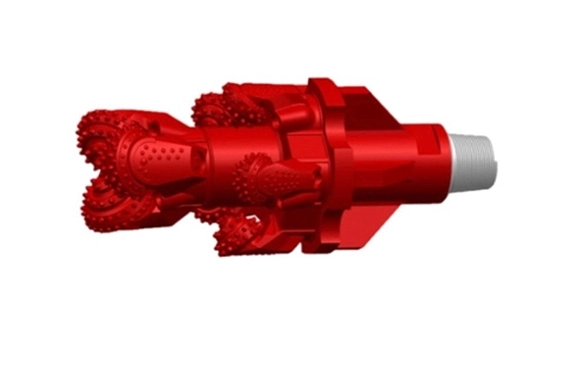
PDC cutting elements are also associated with drilling tools used for hole enlargement and trenchless construction. Related products include PDC hole openers and HDD drilling tools.
 EN
EN