Tel:
0086-190-3126-6699
Email:
jessica@sanlongdrillbit.cn

Choosing the right drilling bit is one of the most important decisions in mining operations. The bit must break rock efficiently, resist wear, control vibration, and match the drilling method, formation hardness, hole diameter, and compressor or rig capacity. For procurement teams, the wrong bit can increase fuel consumption, slow penetration rate, shorten service life, and raise the cost per meter.
This guide explains the main types of drilling bits used in the mining industry, including tricone bits, PDC bits, hybrid bits, DTH bits, top hammer bits, and core bits. It also explains where EXCELLENT(Sanlong) mining tricone drill bits fit in open-pit coal mines, iron mines, non-ferrous metal mines, and hard rock drilling applications.
If you are comparing mining drill bits for sale, the best starting point is not price alone. The better question is: which bit type can deliver stable rock-breaking performance under your real formation and drilling parameters?
Mining drilling may involve blasthole drilling, exploration drilling, production drilling, dewatering holes, geological sampling, or infrastructure-related drilling. Each task creates different requirements for hole diameter, straightness, penetration rate, durability, and cost control.
In hard and abrasive formations such as granite, hard sandstone, dolomite, and chert rock, the bit must resist high impact load and severe wear. In softer coal or sedimentary formations, fast penetration and effective cuttings removal may matter more. In broken or interbedded formations, vibration control becomes critical.
That is why professional buyers usually evaluate bit type, bit size, cutting structure, IADC code, bearing system, air or fluid cleaning capacity, and connection type before confirming an order.
The most common mining drilling bit types can be grouped by rock-breaking method and drilling system. The following categories are widely used in mining and related rock drilling projects.
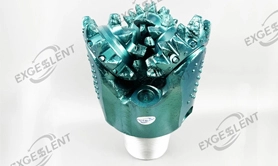
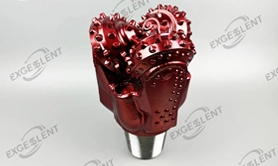
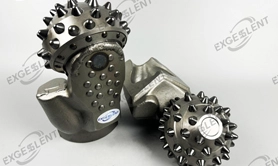
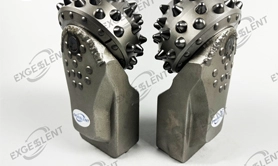
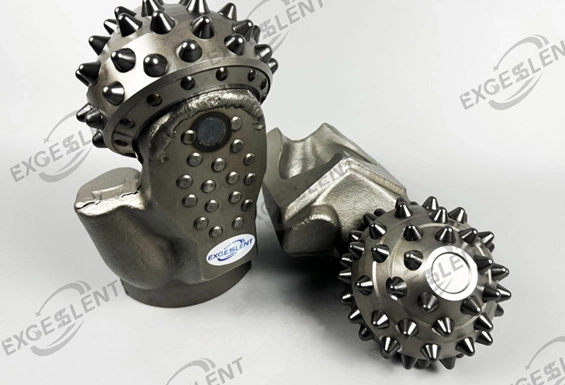
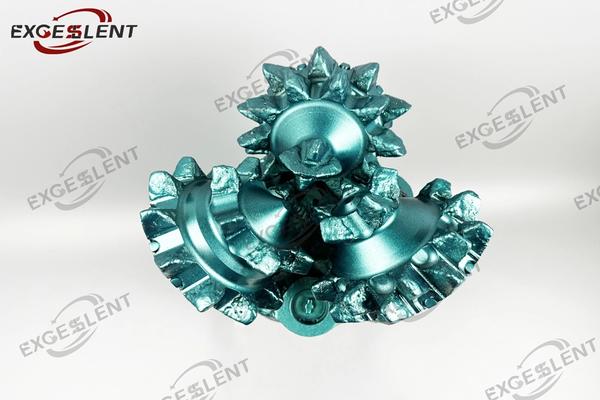
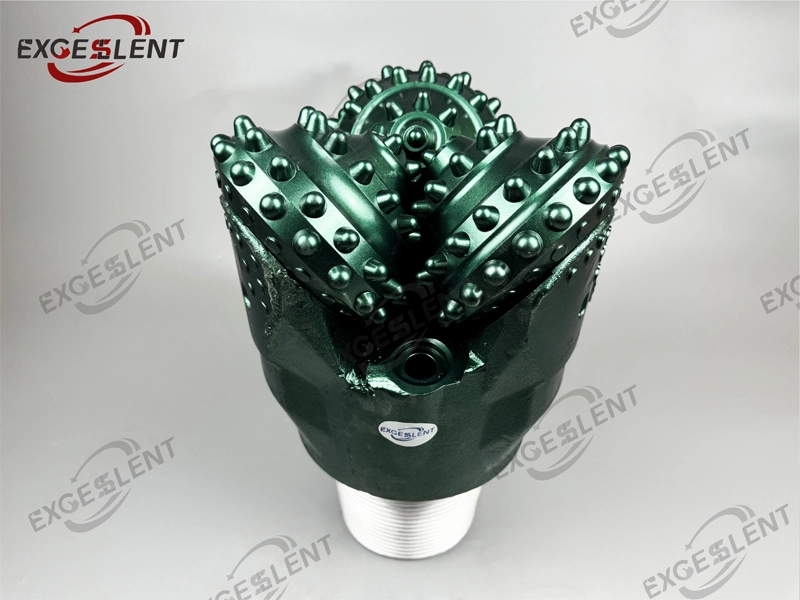
A mining tricone drill bit uses three rotating cones with steel teeth or tungsten carbide inserts. As the cones rotate, the teeth or inserts crush, gouge, and chip the rock. This design is widely used in open-pit coal mines, iron mines, gold mining, non-ferrous metal mines, and hard formation drilling.
EXCELLENT(Sanlong) mining tricone drill bits are designed for air drilling and high compressive strength formations, including dolomite, hard sandstone, granite, and chert rock. Available bit diameters can range from 3.5 inches to 26 inches. Common IADC examples include 537 and 637, which help identify suitable formation hardness and abrasiveness.
Mining tricone bits are especially useful when impact resistance, hard rock adaptability, and bearing durability are important. They are often selected for rotary drilling rigs in open-pit mining and quarrying operations.
Steel tooth bits are a type of tricone bit with teeth milled directly into the cone surface. They are commonly used in softer formations where the rock can be scraped and gouged efficiently without excessive tooth wear.
In mining, a steel tooth bit may be considered for softer coal-bearing formations, clay, shale, or softer sedimentary layers. Their main advantage is aggressive penetration in suitable formations. However, they are not the best choice for highly abrasive hard rock because the teeth may wear quickly.
TCI stands for Tungsten Carbide Insert. A TCI bit uses carbide inserts pressed into the cones, making it more suitable for harder and more abrasive formations than standard steel tooth designs.
For mining contractors drilling granite, hard sandstone, dolomite, chert, or abrasive ore-bearing rock, TCI tricone bits are often preferred because the inserts improve wear resistance and rock-breaking durability. The insert shape, spacing, cone geometry, and IADC code should be matched with the formation.
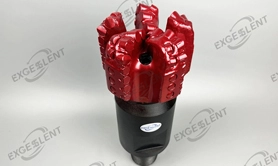
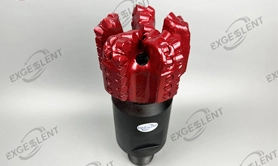
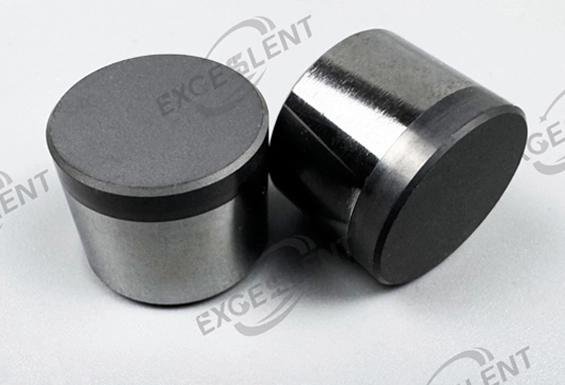
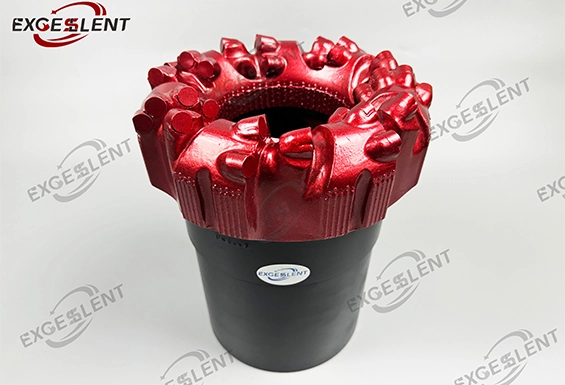
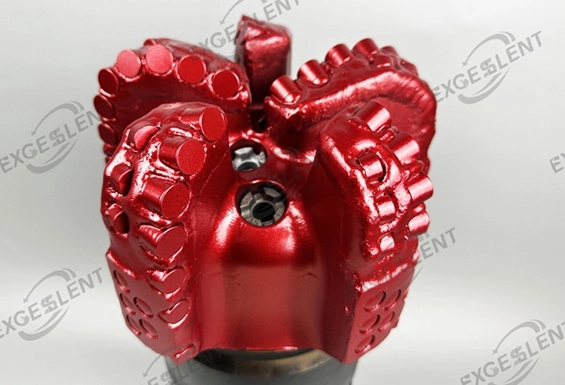
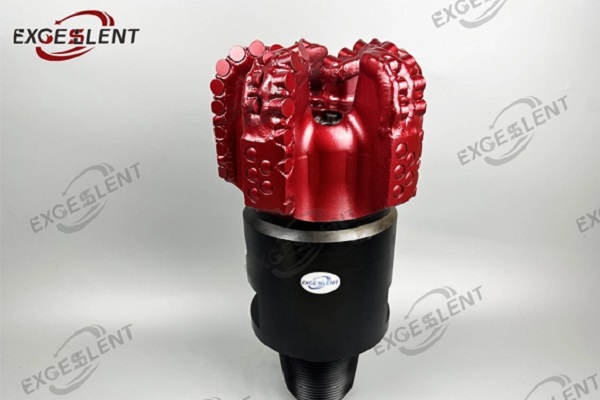
PDC bits use polycrystalline diamond compact cutters fixed on the bit body. Instead of crushing rock with rolling cones, PDC bits shear the formation. They have no moving cones or bearing system, which can help improve mechanical efficiency in suitable formations.
In mining, PDC bits can be used in coal field exploration, geological drilling, water-related mine drilling, and certain stable formations where shearing action is effective. However, when the formation is highly fractured, strongly interbedded, or impact-heavy, a tricone or hybrid design may be more stable.
For broader product comparison, EXCELLENT(Sanlong) offers a range of rock drill bit types, including PDC bits, tricone bits, hybrid drill bits, PDC core drill bits, hole openers, and drilling tool accessories.
A hybrid drill bit combines PDC cutters and conical inserts. The PDC section provides shearing action, while the conical insert section helps crush hard layers and reduce vibration. This makes hybrid bits useful in hard rock formations, interlayers, and drilling conditions where a pure PDC bit may suffer from cutter damage or instability.
EXCELLENT(Sanlong) hybrid drill bits include specifications such as 8 1/2 inch and 12 1/2 inch designs, with listed rotary speed ranges of 60-250 rpm depending on size and working conditions. Buyers can compare hybrid drill bit options when drilling through mixed formations where both shearing and crushing actions are needed.
DTH stands for Down-The-Hole. A DTH bit works with a downhole hammer, delivering percussive impact directly behind the bit. This method is widely used in open-pit mining, quarrying, water well drilling, and hard rock blasthole drilling.
DTH bits are often selected when straight holes, high impact energy, and efficient hard rock penetration are required. Their performance depends heavily on hammer size, air pressure, button shape, flushing design, and rock hardness.
Top hammer bits are used with drilling systems where impact energy is generated outside the hole and transmitted through drill rods. Common designs include button bits, cross bits, and chisel bits.
They are widely used for small to medium-diameter holes in tunneling, underground mining, quarrying, and construction drilling. Top hammer drilling is suitable for shorter holes and applications requiring mobility and fast setup.
Core drill bits are used to obtain cylindrical rock samples for geological analysis. In mining exploration, core samples help evaluate ore grade, structure, mineralization, and rock quality before production planning.
Core drilling focuses more on sample recovery and hole quality than high-volume rock breaking. Bit selection depends on rock hardness, abrasiveness, coring depth, required core diameter, and drilling fluid conditions.
Bit Type | Rock-Breaking Method | Typical Mining Use | Key Advantage | Main Selection Factor |
Mining Tricone Drill Bit | Crushing, gouging, chipping | Open-pit coal, iron, gold, non-ferrous metal mines | Strong adaptability in hard and abrasive formations | IADC code, tooth type, bearing system, air cleaning |
Steel Tooth Bit | Scraping and gouging | Soft coal, shale, clay, soft sedimentary formations | Fast penetration in soft formations | Tooth height, spacing, formation softness |
TCI Bit | Crushing and impact | Hard sandstone, granite, dolomite, chert, abrasive rock | Better wear resistance than steel tooth bits | Insert shape, IADC code, gauge protection |
PDC Bit | Shearing | Coal field exploration, stable formations, geological drilling | No moving cones; efficient shearing in suitable formations | Cutter size, body type, blade count, formation stability |
Hybrid Bit | Shearing plus crushing | Mixed, hard, interbedded, vibration-prone formations | Balances PDC efficiency with roller-cone stability | PDC cutter layout, conical insert design, hydraulic balance |
DTH Bit | Direct percussion | Blasthole drilling, quarrying, open-pit hard rock drilling | High impact energy and good hole straightness | Hammer size, air pressure, button shape |
Core Bit | Annular cutting | Mineral exploration and geological sampling | Recovers rock core for analysis | Core diameter, rock hardness, sample recovery rate |
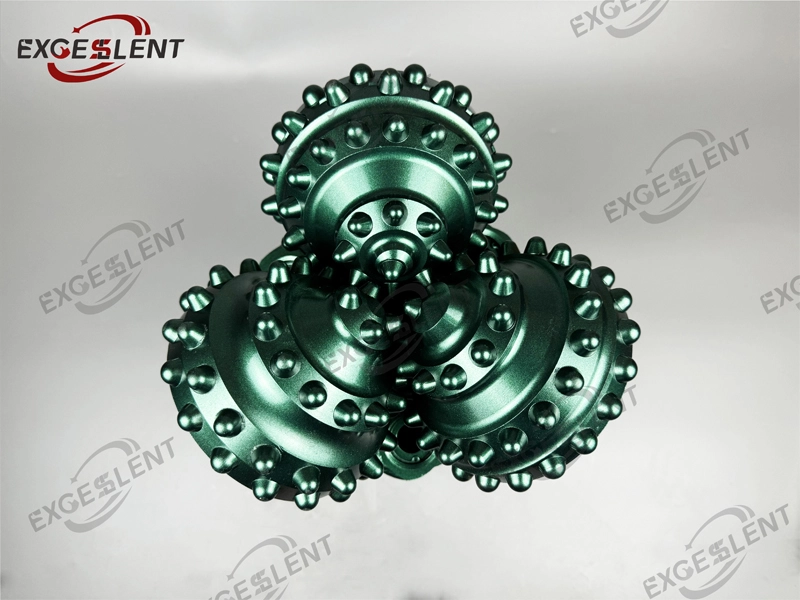
For mining tricone drill bits, several numbers are especially useful during procurement. EXCELLENT(Sanlong) mining tricone drill bits cover bit diameters from 3.5 inches to 26 inches. The design typically uses 3 cones, with steel teeth or tungsten carbide insert teeth depending on formation conditions. Common connection examples include 2 7/8 inch API REG and 3 1/2 inch API REG.
IADC codes are also important. For example, IADC 537 and 637 are commonly referenced for insert-type tricone bits used in harder formations. The first digits help drilling teams identify formation hardness and cutting structure, while the final character may indicate bearing and gauge features depending on the classification system used.
Roller cone bit geometry also changes by formation. Industry drilling references commonly describe smaller journal angles around 30-33 degrees for softer formations and larger journal angles around 34-39 degrees for harder formations. This is one reason hard formation bits are designed differently from soft formation bits.
When evaluating the types of drilling bits used in mining industry, buyers should avoid choosing only by bit name. A mining tricone bit, TCI bit, PDC bit, or hybrid bit can perform very differently depending on formation and drilling parameters.
Formation hardness: Soft formations may need aggressive steel tooth structures, while hard formations usually need TCI, tricone, DTH, or hybrid designs.
Abrasiveness: Abrasive sandstone, granite, and ore-bearing rock require better gauge protection and wear-resistant cutting structures.
Drilling method: Rotary drilling, DTH drilling, top hammer drilling, and core drilling require different bit structures.
Hole diameter: Confirm whether the required hole size matches standard bit sizes or requires customization.
Air or fluid cleaning: Poor cuttings removal can reduce penetration rate and increase heat and wear.
Connection type: Match the thread, such as API REG connections, with rig and drill pipe requirements.
Total drilling cost: Evaluate cost per meter, not only unit price. A more durable bit may reduce trips and downtime.
Although PDC and hybrid technologies continue to develop, mining tricone drill bits remain important because many mining formations are hard, abrasive, broken, or highly variable. In these conditions, rolling cone structures can provide impact resistance and formation adaptability.
EXCELLENT(Sanlong) mining tricone drill bits use high-wear-resistance bearing materials, carbide ball teeth, strengthened gauge protection, and nozzle arrangements designed for bottom-hole cleaning. These features help support drilling stability, reduce tooth breakage risk, and improve service life in demanding mining conditions.
For procurement teams searching for mining drill bits for sale, this makes the mining tricone drill bit a practical option for open-pit coal mines, iron mines, gold mining, and non-ferrous metal mining projects where rock strength and abrasiveness are major concerns.
The main types include mining tricone drill bits, steel tooth bits, TCI bits, PDC bits, hybrid bits, DTH bits, top hammer bits, and core drill bits. Each type is designed for different rock-breaking methods, drilling systems, and formation conditions.
For hard rock mining, TCI tricone bits, mining tricone drill bits, DTH bits, and hybrid bits are commonly considered. The best choice depends on rock hardness, abrasiveness, hole diameter, drilling depth, rig type, and air or fluid cleaning capacity.
Steel tooth bits have milled teeth and are better suited for softer formations. TCI bits use tungsten carbide inserts, making them more suitable for harder and more abrasive formations such as granite, dolomite, hard sandstone, and chert.
Yes, PDC bits can be suitable for mining-related applications such as coal field exploration, geological drilling, and stable formations. However, in fractured, hard, or impact-heavy formations, tricone or hybrid bits may provide better stability.
Provide hole diameter, formation description, rock hardness, drilling depth, drilling method, rig model, compressor or pump capacity, thread connection, required IADC code if available, and previous bit performance records. This helps the supplier recommend a more accurate bit design.
EXCELLENT(Sanlong) provides mining tricone drill bits for open-pit coal mines, iron mines, gold mining, and non-ferrous metal mines. Available options include 3.5-inch to 26-inch bit diameters, steel tooth or TCI cutting structures, API connection options, strengthened gauge protection, and optimized nozzle designs for cuttings removal.
The main types of drilling bits used in the mining industry include tricone bits, steel tooth bits, TCI bits, PDC bits, hybrid bits, DTH bits, top hammer bits, and core bits. Each type has a different rock-breaking mechanism and should be selected according to formation hardness, abrasiveness, drilling method, hole diameter, and total cost target.
For open-pit coal mines, iron mines, gold mining, and non-ferrous metal mining projects, EXCELLENT(Sanlong) mining tricone drill bits offer a practical solution for hard and abrasive formations. If you are comparing mining drill bits for sale, share your formation data, hole size, rig parameters, and expected drilling target to receive a suitable bit recommendation.
 EN
EN