Tel:
0086-190-3126-6699
Email:
jessica@sanlongdrillbit.cn

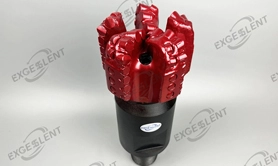
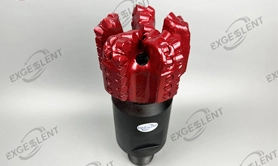
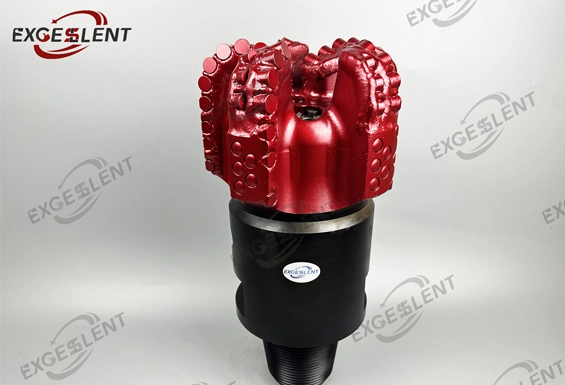
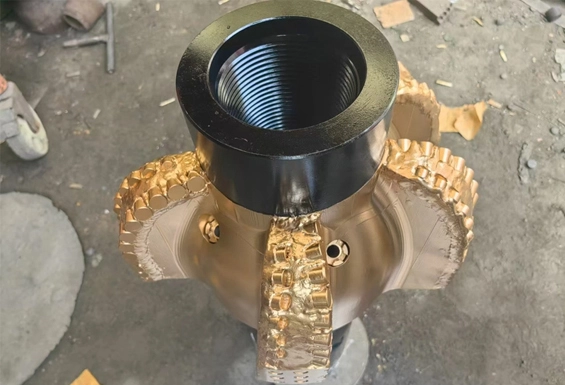
In drilling, PDC stands for Polycrystalline Diamond Compact. A PDC bit is a fixed-cutter drill bit that uses synthetic diamond compact cutters to shear rock with a continuous scraping action instead of crushing it with rolling cones.
For drilling contractors, oilfield buyers, water well teams, geothermal projects, and mining operators, understanding what PDC means is more than a terminology question. It helps determine whether a PDC drill bit is suitable for the formation, what body type to choose, and how to compare performance, durability, and cost per meter or cost per foot.
EXCELLENT(Sanlong) supplies PDC drill bit solutions for oil and gas drilling, coal field exploration, water well drilling, geothermal drilling, mining, and related applications. If you are comparing options or looking for a pdc bit for sale, the first step is to understand how PDC technology works.
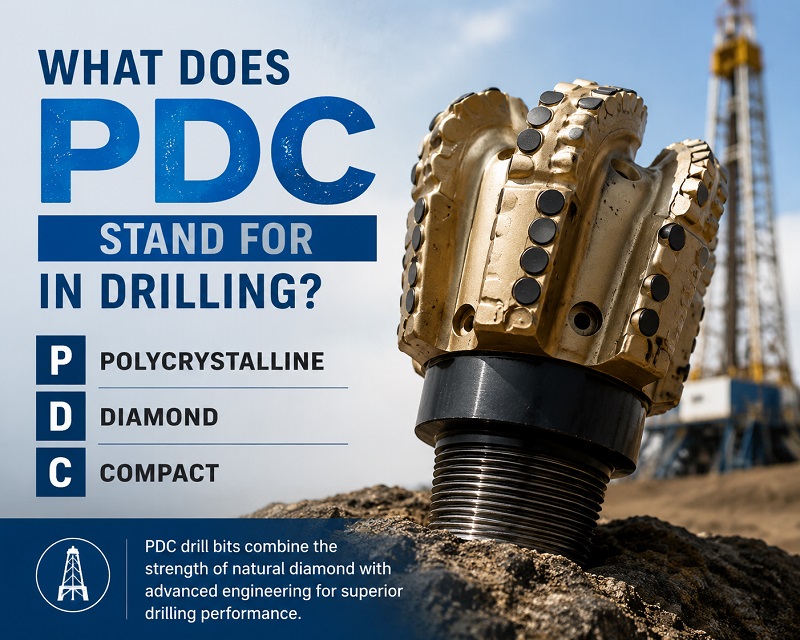
PDC stands for Polycrystalline Diamond Compact. It refers to the cutter material used on the bit face. Each PDC cutter usually consists of a synthetic polycrystalline diamond layer bonded to a tungsten carbide substrate. The diamond layer provides hardness and wear resistance, while the carbide substrate supports impact strength and bonding stability.
In industry terminology, a PDC bit is also commonly called a fixed-cutter bit because it has no rolling cones or bearing system. Instead of crushing rock, the cutters scrape and shear the formation as the bit rotates. This cutting mechanism is one reason PDC bits are widely used where stable formation conditions and high drilling efficiency are required.
A widely referenced technical definition describes PDC cutters as synthetic diamond disks about 1/8 inch thick and about 1/2 to 1 inch in diameter. In practical product selection, cutter size, blade count, body material, hydraulic design, gauge protection, and IADC code all affect performance.
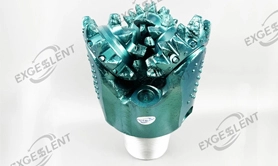
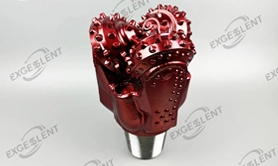
A pdc bit for sale works by using fixed diamond compact cutters mounted on the bit body. As the drill string rotates, the cutters engage the rock face and remove material by shearing. This is different from tricone bits, which use rotating cones and teeth or inserts to crush and gouge rock.
The typical advantages of this shearing action include:
Faster rate of penetration in suitable formations.
No bearing failure risk because there are no moving cones.
Stable cutting performance in soft to medium-hard formations.
Better energy transfer when matched with the right WOB, RPM, flow rate, and formation.
However, PDC bits are not automatically the best choice for every job. Highly broken, gravelly, or strongly interbedded formations may cause vibration, cutter damage, or unstable drilling if the bit design is not matched correctly.
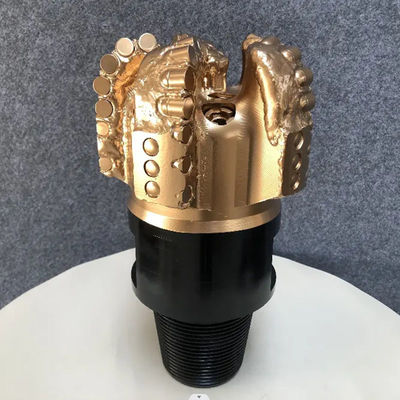
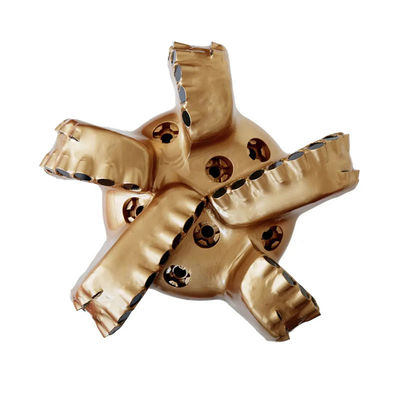
PDC bits are widely used because they can improve drilling efficiency when the formation is suitable. In many drilling programs, the key goal is not only to drill faster but to reduce trips, bit changes, downtime, and total drilling cost.
For example, EXCELLENT(Sanlong) offers PDC bit options covering common project needs, including matrix body PDC bits, steel body PDC bits, and steel body imitation petroleum PDC bits. The available size range can cover 3 inches to 26 inches, with common field sizes such as 8 1/2 inches and 12 1/4 inches. Cutter sizes such as 13 mm, 16 mm, and 19 mm may be selected depending on rock strength and drilling requirements.
For procurement teams, these numbers are useful because they connect the technical question “what does PDC stand for” with real purchasing decisions: bit diameter, cutter layout, body type, connection thread, torque range, nozzle quantity, and expected formation.
Both PDC bits and tricone bits are used in drilling, but they break rock in different ways. The choice depends on formation type, drilling objective, rig condition, and total cost target.
Item | PDC Bit | Tricone Bit |
Full meaning | Polycrystalline Diamond Compact bit | Three-cone roller bit |
Rock cutting method | Shearing and scraping | Crushing, gouging, and rolling |
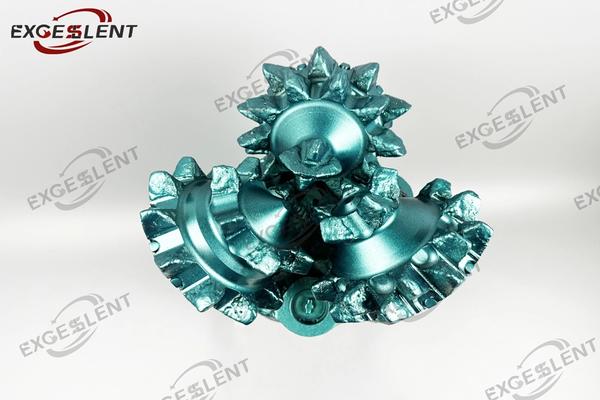
Moving parts | No moving cones or bearings | Three rotating cones with bearings |
Best suited for | Soft to medium-hard, stable, and some abrasive formations depending on design | Variable, broken, hard, or impact-prone formations |
Typical advantage | High ROP and reduced bearing-related failure risk | Strong adaptability in mixed and unstable formations |
Common concern | Cutter chipping, vibration, thermal wear, poor match with formation | Bearing wear, cone wear, lower efficiency in some stable formations |
Procurement focus | Cutter size, blade count, body material, hydraulic design, gauge protection | Tooth/insert type, bearing type, seal, cone structure, IADC code |
In simple terms, a PDC bit is often chosen when the buyer wants efficient shearing action and strong penetration potential in suitable formations. A tricone bit is often considered when the formation is highly variable, hard, fractured, or impact-heavy.
After confirming that PDC technology is suitable, the next decision is usually body type. The two common options are matrix body and steel body.
A matrix pdc bit uses a tungsten carbide matrix material around the cutters. It is generally selected for abrasive and demanding formations because matrix material provides strong wear and erosion resistance. This makes it useful for deep, abrasive, or complex drilling conditions where bit body durability is important.
A steel body pdc bit uses high-strength alloy steel. It provides good toughness, impact resistance, and repairability. Steel body designs are often preferred in soft to medium formations, interbedded formations, geothermal drilling, water well drilling, and projects where cost performance and rebuild potential matter.
Selection Factor | Matrix Body PDC Bit | Steel Body PDC Bit |
Body material | Tungsten carbide matrix | High-strength alloy steel |
Wear resistance | Excellent | Good |
Impact resistance | Moderate to good, depending on design | Excellent |
Repairability | Limited | Better repair and re-tipping potential |
Typical applications | Abrasive, hard, deep, or complex formations | Soft-to-medium, interbedded, geothermal, water well, and cost-sensitive drilling |
Buyer priority | Longer wear life in abrasive conditions | Toughness, flexibility, and lower cost-per-run potential |
For many projects, the better choice is not the “strongest” bit on paper, but the bit that fits the actual formation and operating parameters.
When purchasing a PDC bit, buyers should not only compare price. A low unit price may become expensive if the bit fails early, drills slowly, or requires frequent trips. Before sending an inquiry, prepare the following information:
Formation type: soft, medium, hard, abrasive, interbedded, fractured, shale, sandstone, limestone, coal seam, or gravel layer.
Bit size and hole size: common sizes include 8 1/2 inches and 12 1/4 inches, while EXCELLENT(Sanlong) can support customized sizes from 3 inches to 26 inches.
Operating parameters: expected WOB, RPM, pump pressure, flow rate, mud type, drilling depth, and temperature.
Bit design needs: blade count, cutter size, nozzle quantity, gauge length, back-up cutters, gauge protection, and hydraulic layout.
Connection and standard: confirm thread type, recommended torque, API compatibility, and rig requirements.
These details help the supplier recommend a bit that balances rate of penetration, stability, wear resistance, and total drilling cost.
PDC bits are widely used across several industries because fixed-cutter technology can be customized for different drilling scenarios. Common applications include oil and gas drilling, coal field exploration, mining, geothermal drilling, water well drilling, geological exploration, and HDD-related projects.
For oil and gas drilling, buyers often focus on ROP, bit life, directional stability, and cost per foot. For water well and geothermal drilling, durability, repairability, and cost control may be more important. For mining and coal field exploration, formation abrasiveness, cutter protection, and body wear resistance become key factors.
EXCELLENT(Sanlong) supports different PDC bit structures for these applications, helping buyers choose between matrix body, steel body, and imitation petroleum designs based on drilling conditions rather than product names alone.
PDC stands for Polycrystalline Diamond Compact. In drilling, it refers to a fixed-cutter bit that uses synthetic diamond compact cutters to shear rock during rotation.
Not exactly. A PDC bit uses synthetic polycrystalline diamond compact cutters bonded to a carbide substrate. It is one type of diamond-based drilling tool, but it is different from natural diamond bits, impregnated diamond bits, or core drilling diamond tools.
PDC drill bits usually perform well in soft to medium-hard, stable, and relatively homogeneous formations. With the right cutter design and body material, they can also be used in abrasive or harder formations, but broken gravel layers or severe interbedding require careful selection.
PDC bits are fixed-cutter bits. The cutters are fixed on the bit body, so there are no rolling cones or bearings. This reduces bearing-related failure risk and helps deliver stable shearing action in suitable formations.
Choose a matrix body PDC bit for stronger wear and erosion resistance in abrasive or complex formations. Choose a steel body PDC bit when impact resistance, repairability, and cost performance are more important.
Provide bit size, formation description, drilling depth, application, rig type, WOB, RPM, pump flow, mud condition, connection thread, expected ROP, and any previous bit performance records. This helps EXCELLENT(Sanlong) recommend a more suitable PDC bit design.
PDC stands for Polycrystalline Diamond Compact, a fixed-cutter drilling technology that uses synthetic diamond compact cutters to shear rock efficiently. For buyers, the term matters because it directly connects to bit structure, cutter design, formation suitability, drilling speed, wear life, and total project cost.
If you are comparing PDC drill bits for oil and gas, water well, geothermal, coal field, or mining applications, EXCELLENT(Sanlong) can help evaluate the formation, operating parameters, and body type required for your project. Share your drilling conditions and target performance requirements to discuss a suitable PDC bit solution.
 EN
EN